Guide
What is CBD resin? Traditional sieving in the Rif
What CBD resin is, what Law 13-21 says about it, how the Rif sieves it the traditional way, and what a professional buyer looks for. Updated on 11 November 2026.
The short answer
CBD resin is the trichome-rich material, the tiny glands of the plant, that is separated from the dried flowers and then gathered into a compact form. In English it is often called “CBD hash”. In the Rif, it is traditionally separated by beating and sieving, without solvents. At MyCBD, in Chefchaouen, it is pressed into 100 g blocks labelled MyCBD and sold to professionals, in bulk or under their own brand.
What is CBD resin?
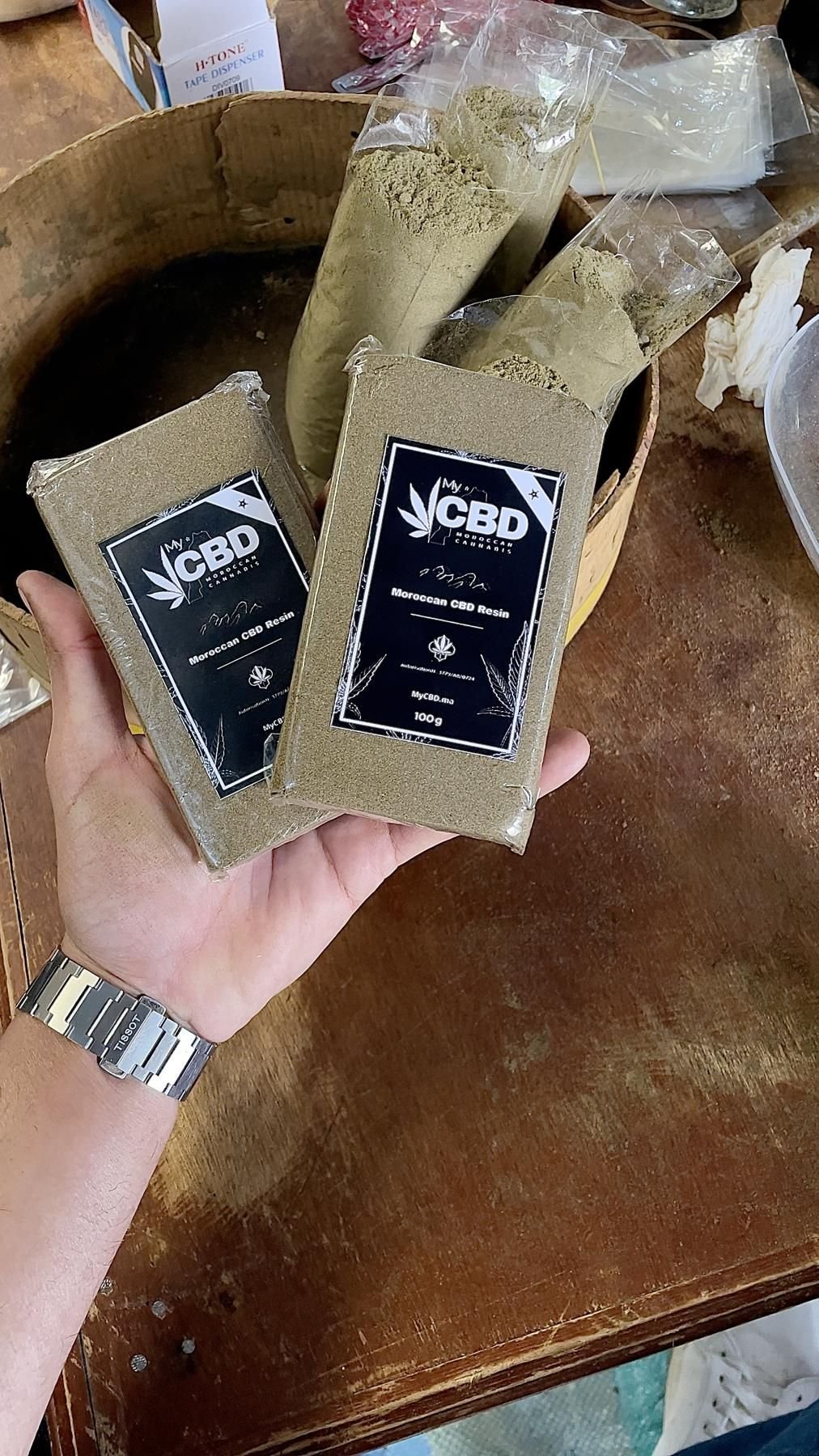
CBD resin is the trichome-rich material separated from the dried flowers of the plant and then gathered into a compact form: at MyCBD, 100 g blocks.
Trichomes are the tiny glands that cover the flowers. Resin is made of them: it does not contain the whole plant, only what has been separated from it. That is what sets it apart from flowers, sold as they are, and from oils, obtained by extraction.
In French, the word is résine de CBD; in English, people often say “CBD hash” or “CBD resin”. It is the same material.
How does Moroccan law define resin?
Law No. 13-21 on the lawful uses of cannabis defines resin in its Article 2: cannabis resin: the separated resin, crude or purified, extracted from the cannabis plant
(Article 2).
The text of the law contains neither the word “CBD” nor the word “cannabidiol”: CBD resin therefore falls under the rules that apply to cannabis and its products, including the authorisations issued by ANRAC. Our guide to Law 13-21 goes through the text article by article.
What is traditional Rif sieving?
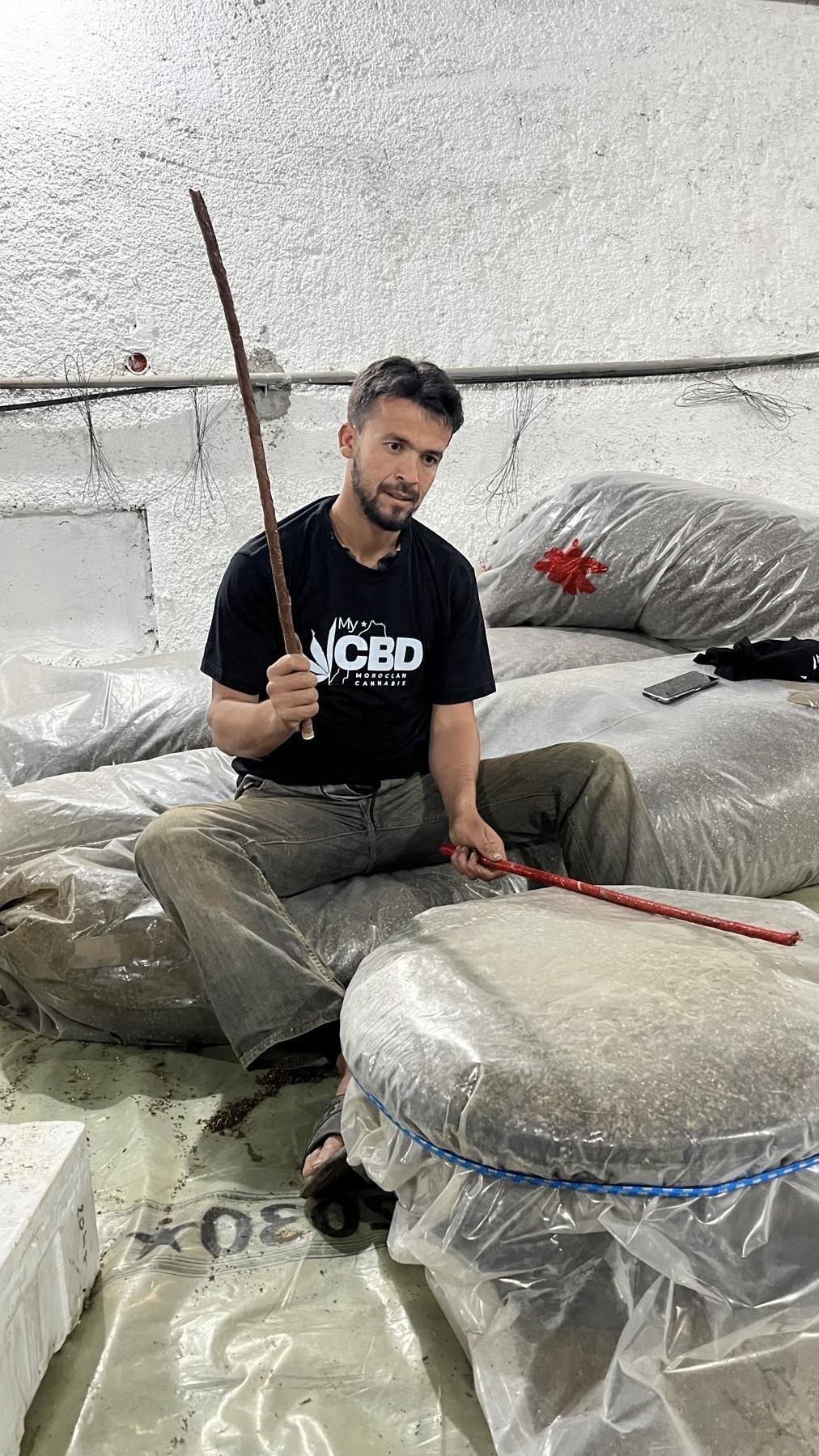
Traditional sieving separates the resin from the dried flowers in two steps, without solvents: beating, which loosens the trichomes from the plant, then sieving, which collects them.
In the MyCBD workshop in Chefchaouen, the method is still the Rif’s own: beating sticks, large sacks, and time. The dried flowers are beaten, then sieved, and the resin collected is then pressed into blocks.
It is slow, hands-on work that takes care. In the Rif, separating resin by beating and sieving is hands-on know-how: we have kept it as it is.
From plant to block, in six steps
At MyCBD, a resin goes through six steps, all in the Chefchaouen region: nursery, field, inspection, sieving, packing, then the delivered batch.
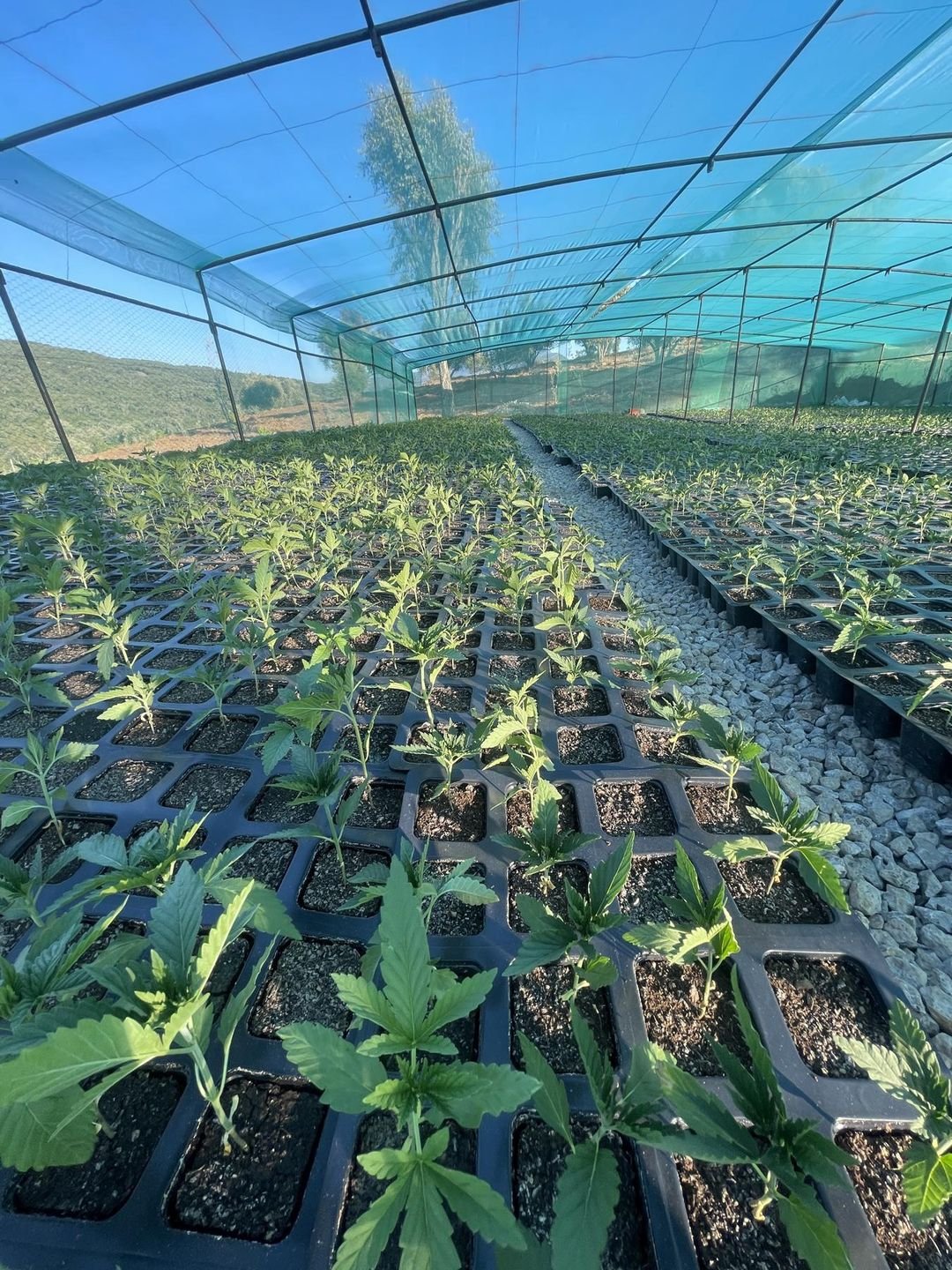
- Nursery. Young plants start under greenhouse cover in the Chefchaouen region, before being planted out.
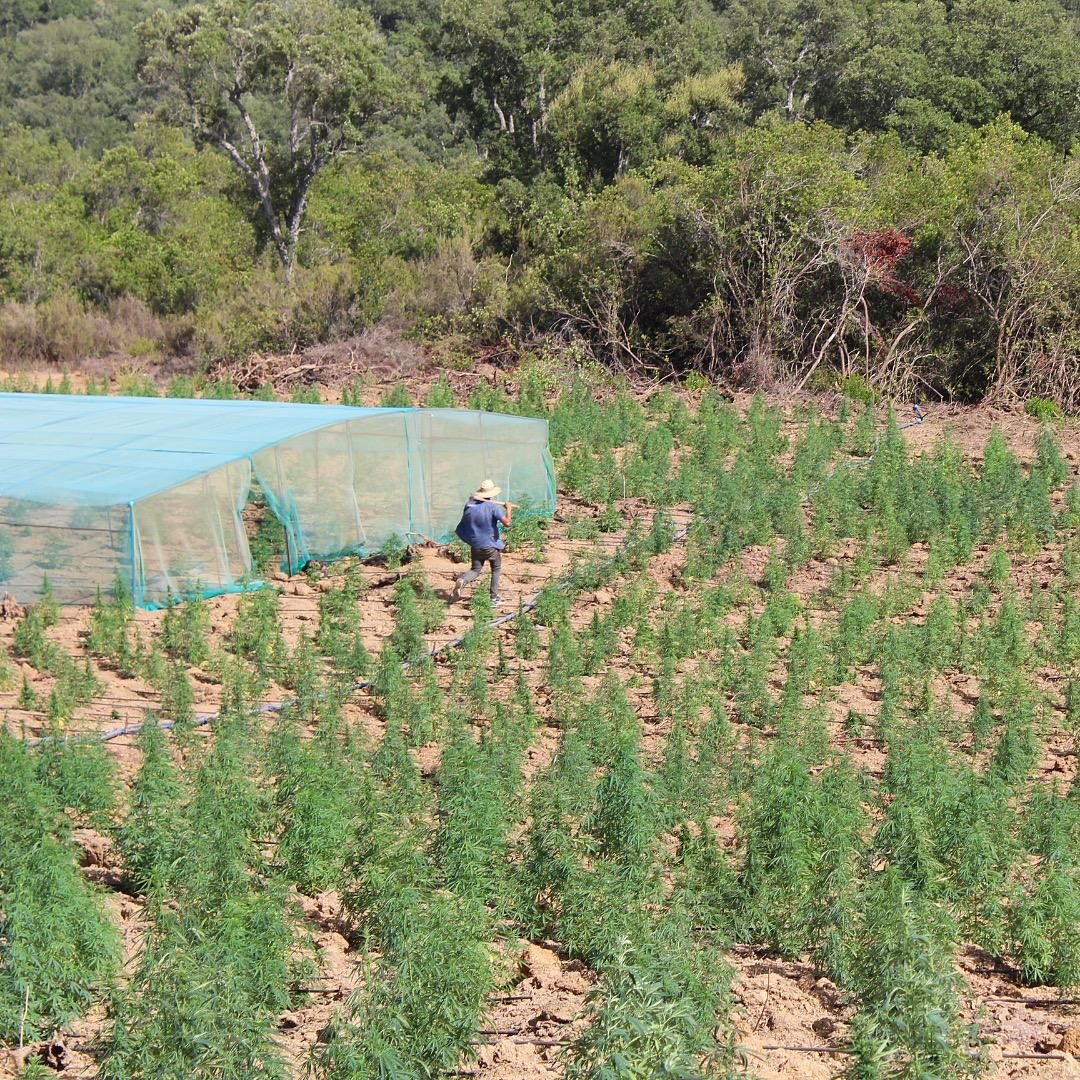
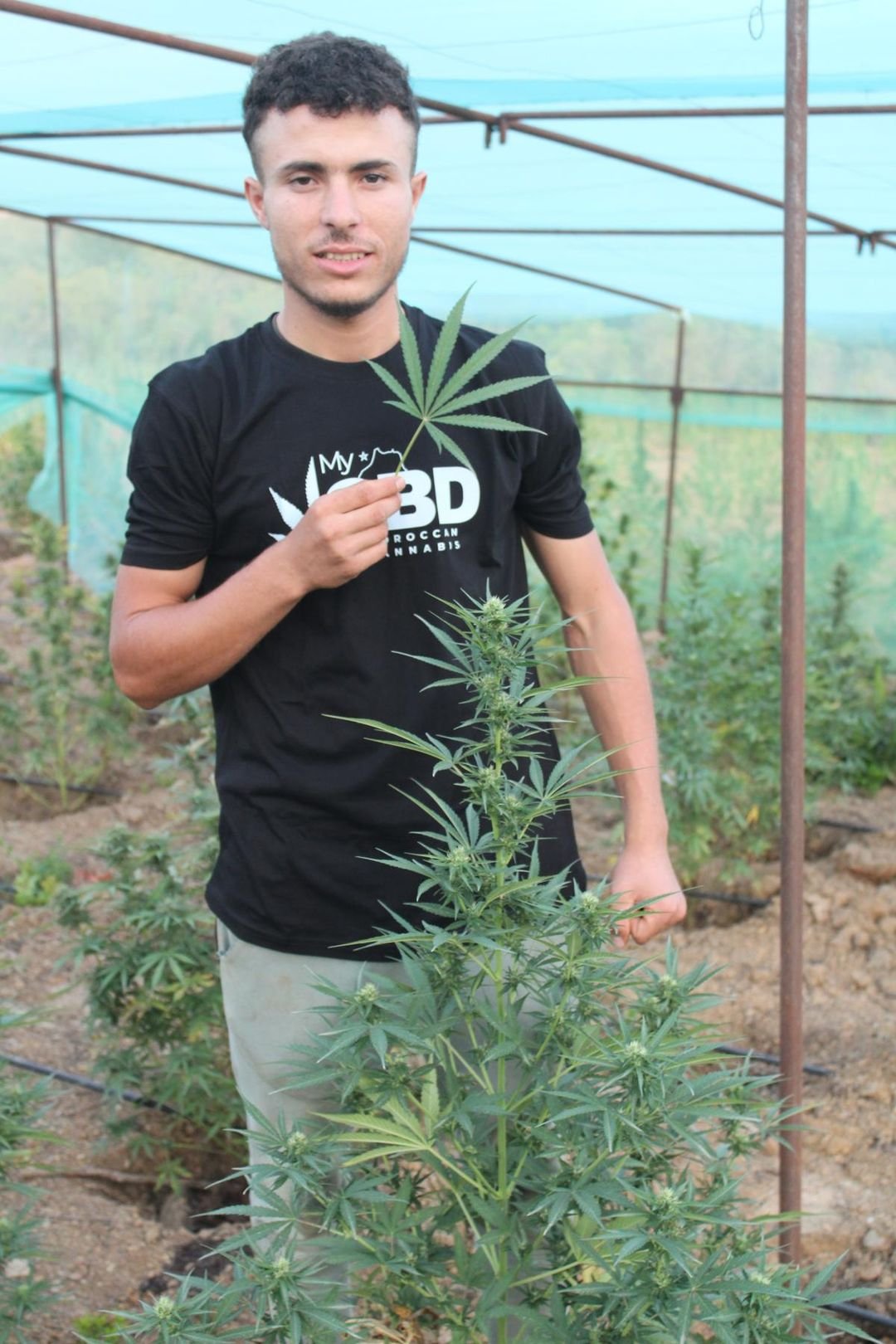
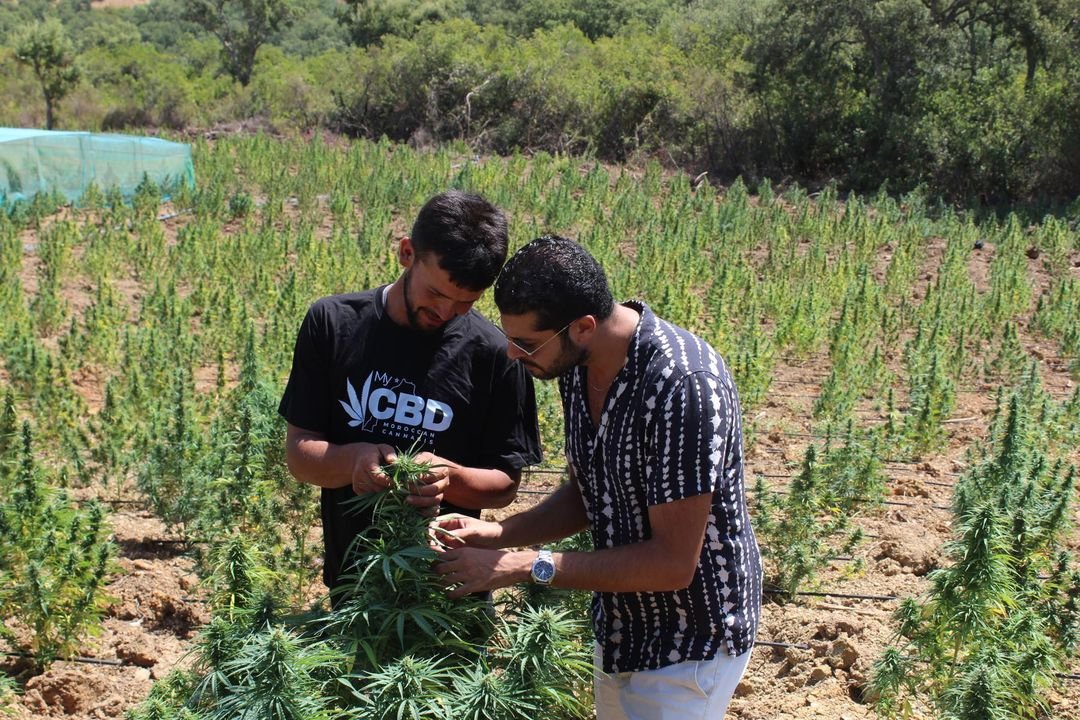
- Field. Grown without pesticides on the slopes of the Rif, the plants thrive in the mountain light.
- Inspection. The plants are inspected by hand, leaf by leaf, before harvest.
- Sieving. The resin is separated in the workshop by traditional beating and sieving.
- Packing. The resin is pressed into 100 g blocks, labelled MyCBD and ready to ship.
- The delivered batch. The batch leaves the Rif with its documents, bound for export. The mountain stays on the label.
Step by step: traceability from seed to batch.
Why 100 g blocks?
MyCBD resin is pressed into 100 g blocks labelled MyCBD: a format that is easy to count, store and resell as it is.
The number of blocks per batch, the shipping packaging and the transport method are set in the quote, according to the quantity and the destination. For transport, Law 13-21 requires that Cannabis products, whatever their destination, must be transported in closed packaging or containers so as to prevent any substitution or mixing of their contents with other products
(Article 18).
What a buyer looks for in a resin
Specialist CBD shops and distributors look at three things first in a resin: its aromas, its texture and its burn.
A well-worked resin keeps a supple texture that can be worked by hand. Its aromas stay true. Its burn is even. That is what we take care of in every batch.
Beyond the material, a professional buyer asks for proof: the origin, the traceability of the batch and the certificate of analysis, which carries the measured levels. We publish no levels on this website: those of a batch appear on its certificate, sent on request with the technical sheet.
Why a resin from the Rif?
In the Rif, separating resin by beating and sieving is hands-on know-how. That is where, in Chefchaouen, MyCBD sieves its resin.
Our fields there are grown without pesticides, on the slopes, at the foot of the mountains. The field, the greenhouse and the workshop are in the same region: every batch can be followed from end to end. See the Chefchaouen terroir.
Can the resin be sold under your own brand?
Yes, as private label: your label goes on our 100 g blocks, and the resin, its sieving and its documents stay the same.
How it works, from request to shipment: private label CBD resin.
MyCBD, the CBD resin specialist in Morocco
MyCBD works with one raw material only, CBD resin, from the nursery to the block, in Chefchaouen. Its production is authorised by ANRAC. Its cultivation is GACP certified.
We sell it to professionals, in Morocco and for export, on quotation request. See our CBD resin sheet or request a quote.
Frequently asked questions
Yes. “Hash” is the word often used in English; in French, people say résine de CBD. It is the same material, separated from the plant and gathered into a compact form.
At MyCBD, by traditional beating and sieving of the dried flowers, in the Chefchaouen workshop, without solvents. The resin collected is then pressed into 100 g blocks.
It defines it in Article 2 as the separated resin, crude or purified, extracted from the cannabis plant. The text does not mention CBD as such: it speaks of cannabis and its products.
It appears on the certificate of analysis of the batch, sent on request. We publish no levels on the website: it depends on the batch we offer you.
MyCBD sells its resin to professionals, in Morocco and for export, on quotation request: in 100 g blocks labelled MyCBD, or under your own brand.
Contact
A resin from the Rif, for your shop or your brand
Tell us what quantity and for which country: we come back to you with an offer.